An X-Ray Look on iPhone: Appearance Versus Measurement
Advertisements
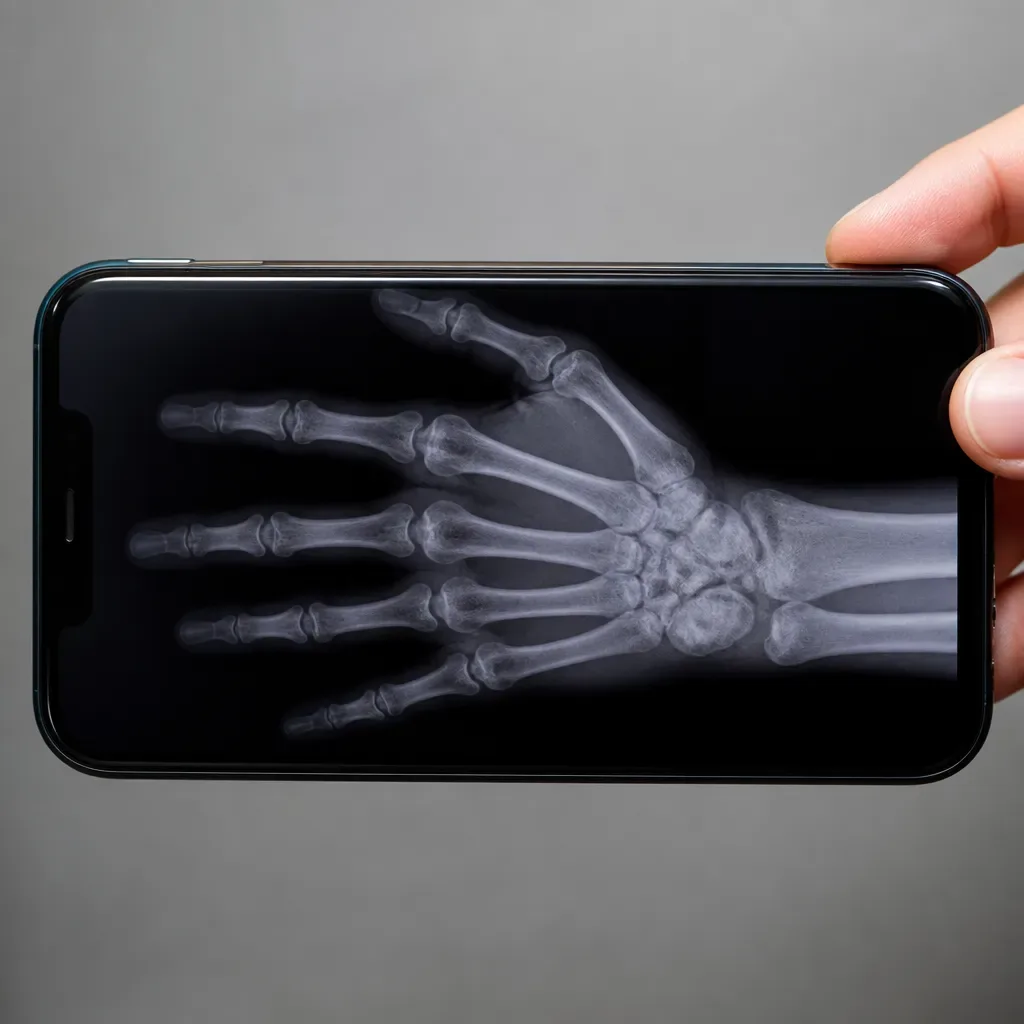
A photo can be edited to resemble an X-ray, but an iPhone camera cannot create a professional radiograph in seconds.
Advertisements
The image effect changes the visible photograph. Real internal imaging needs suitable equipment rather than a convincing color treatment.
How a Simulated iPhone Image Is Made
Processing works with the camera’s captured picture. It does not establish a measurement of hidden bones or internal structures.
A neural-network description does not prove access to genuine radiographic information about the photographed subject.
Lighting, focus, and processing influence appearance. They do not determine the clinical accuracy of a camera effect.
 Xray scan filter cam
Google Play rating:
★★ ★ ★ ★
1 / 5
Store age rating:
PEGI 3
Author
rokdevapps
Platform:
Android
Price:
Free download; check in-app costs
▶Download on Google Play
What AI Can Change in a Picture
AI can produce or alter visual patterns, but generated anatomy is not a scan of the person in the photo.
Claims about training on certified medical images require evidence and validation. They cannot be assumed from an X-ray-style result.
A highly realistic simulation can remain invented. Realism and measurement accuracy are different.
Choose a Compatible Camera-Effect App
Check the exact product and platform. Xray scan filter cam’s Google Play download is for Android, not iPhone.
A live preview, if offered by a compatible app, shows the effect on the camera picture rather than an internal view.
Compare actual editing functions and compatibility instead of assuming similarly named products have the same features.
Creative Uses and Practical Boundaries
An effect can illustrate visual editing. Teaching anatomy requires suitable factual material beyond the invented appearance.
A training demonstration must explain what is simulated. It cannot verify the contents of luggage or replace security equipment.
Creators may use the aesthetic in artwork or advertising, while making the edited nature clear.
Product documentation needs actual evidence of internal components. A generated overlay cannot verify construction or defects.
Capture a Better Starting Photograph
Use even lighting and avoid glare that hides the visible subject.
Clear outlines can make an effect more striking, without revealing what lies beneath them.
Choose a distance where the camera focuses and the framing suits the picture.
Compare visible textures and shapes for creative variation. Different effects do not reveal true bones or material densities.
Limitations to Understand
The output is not diagnostic information or a substitute for professional radiography.
Device performance varies. A named processor generation does not guarantee instant results or more accurate internal anatomy.
Check photo handling and data practices. Local processing should be confirmed rather than inferred.
Subject size and distance affect photographic detail. They do not change an ordinary camera’s inability to inspect concealed structures.
What Results You Can Reasonably Expect
Expect an altered picture when the compatible app provides an effect. Do not interpret it as real internal information.
A simulated image does not demonstrate tissue density or radiopacity. Use validated material for those educational concepts.
For a creative project, judge the style and clarity. Novelty does not require a false scientific claim.
Security training needs appropriate demonstrations and equipment. A realistic-looking photo effect is not evidence that a detection procedure works.